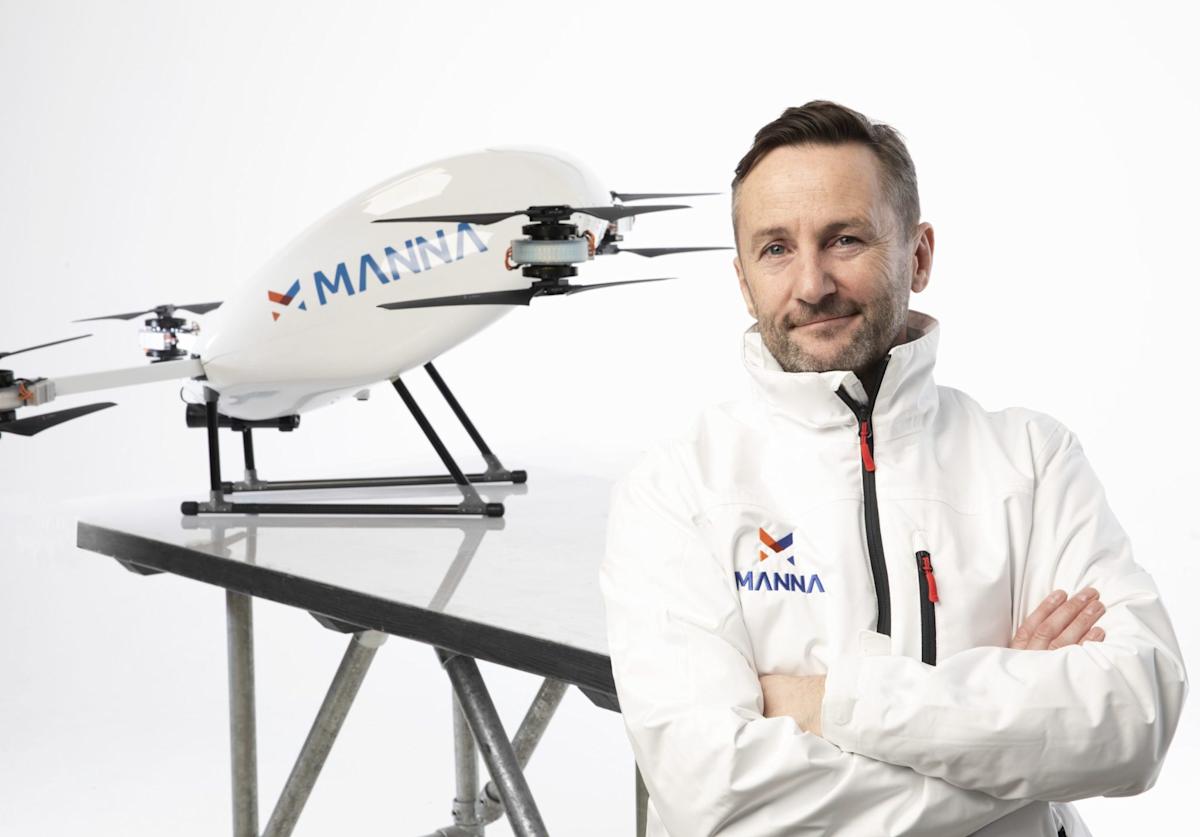
Manna, the Irish drone delivery startup, closed a Series B this month backed by ARK Invest’Cathie Wood’s firm, known for early investments in OpenAI, Tesla, and SpaceX’along with the Ireland Strategic Investment Fund, Schooner Capital, Coca Cola HBC, and Molten Ventures. The capital will be put towards expanding Manna’s U.S. and European operations. Total funding now sits at $110 million.
Manna, founded in 2018, operates throughout Ireland, as well as Finland and Texas, delivering anything from burritos to biomedical tests. The company has already completed more than 250,000 successful deliveries. It recently announced a new partnership with Uber, and has existing contracts with DoorDash, Deliveroo, and Just Eat.
Road-based delivery in the U.S. costs merchants around $10 per order in driver costs alone. Manna does it for cents in electricity. Its drones fly at around 50 to 60 mph in a straight line, deliver in under three minutes, and turn around in under 60 seconds’eight deliveries per aircraft per hour versus the industry average of 1.2.
Meanwhile, the global rapid delivery economy’same-day and on-demand’is projected to grow 21.3% year-over-year for the next decade, reaching $100 billion by 2034, according to Manna. And the last-mile (from hub to final destination) delivery market was worth an estimated $166.45 billion in 2024 and is projected to reach $311.31 billion by 2031, growing at a CAGR of 9.62 percent.
Manna’s U.S. target is 92 million family homes that gig economy delivery has never served profitably. As Healy notes, there are more than a billion food delivery orders placed annually in the U.S., and not enough drivers to move them without bleeding money. “Drones don’t take jobs away,” Healy added. “You’re giving every small business in the suburbs a better logistics platform than Amazon has.”
Recent regulatory unlock, according to Healy, is what’s making VCs move now. The FAA has historically required drone operators to keep their aircraft in direct eyesight at all times, making commercial delivery at scale essentially illegal without a one-off waiver for every single flight. In August 2025, the agency proposed Part 108, a new permanent ruleset that would allow drones to fly beyond what operators can see. The deadline to finalize these rules is mid-2026.