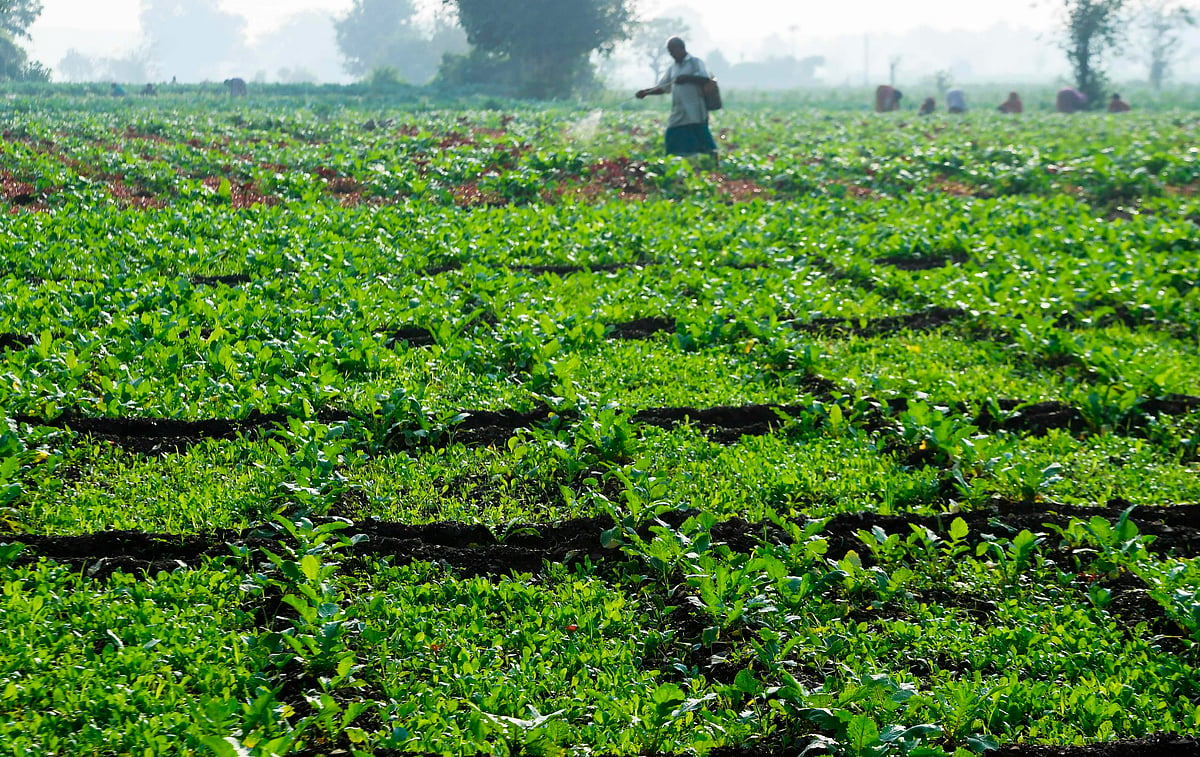
The use of technology and machinery in agriculture is increasing day by day. Instead of harvesting rice or crops with traditional sickles, harvesters are now being used to cut, thresh, and winnow crops simultaneously. Advanced mechanised methods for applying pesticides and fertilizers using drones have also arrived.
Agricultural officers and farmers say that using drones allows fertilisers and pesticides to be sprayed in measured quantities, while also avoiding health risks for farmers. Where it takes a person two hours to spray pesticides on one bigha of land, a drone takes only five minutes, and the cost is lower as well.
Two companies’Genius Farms Limited and Flymec’are jointly carrying out pilot, field-level pesticide application using drones. Technical support is being provided by the Bangladesh Agricultural Research Institute. These drones, manufactured locally using Chinese components, can carry up to five kilograms of pesticides.
This service is being provided through two local farmers” associations in Belabo upazila of Narsingdi and Singair upazila of Manikganj. For now, farmers can avail themselves of the service using two drones in exchange for a fixed fee. The drone technology was recently showcased at the SME Fair held in Dhaka.
Explaining the advantages of drone-based pesticide spraying, Samiran Biswas, Head of the Agriculture Department at Genius Farms, told Prothom Alo that spraying pesticides on one bigha of land using drones costs between Tk 200 and Tk 300, whereas the cost through agricultural laborers ranges from about Tk 500 to Tk 1,000. A person needs two hours to do the job, while a drone completes it in just three to five minutes.It is learned that this modern technology is currently being used to apply pesticides on 50 to 60 acres of land belonging to around 200 farmers in the two upazilas mentioned.
Meanwhile, drones are also being used for the same purpose in Birulia, Savar. Farmer Moktar Hossain said that pesticides were sprayed on his land by operating a drone through remote control. On days when pesticides are applied using traditional methods, the body becomes weak, and even using masks does not fully prevent harm. Spraying with machines seems to reduce those risks. Moreover, spraying pesticides on one bigha of land takes nearly two hours using conventional methods.