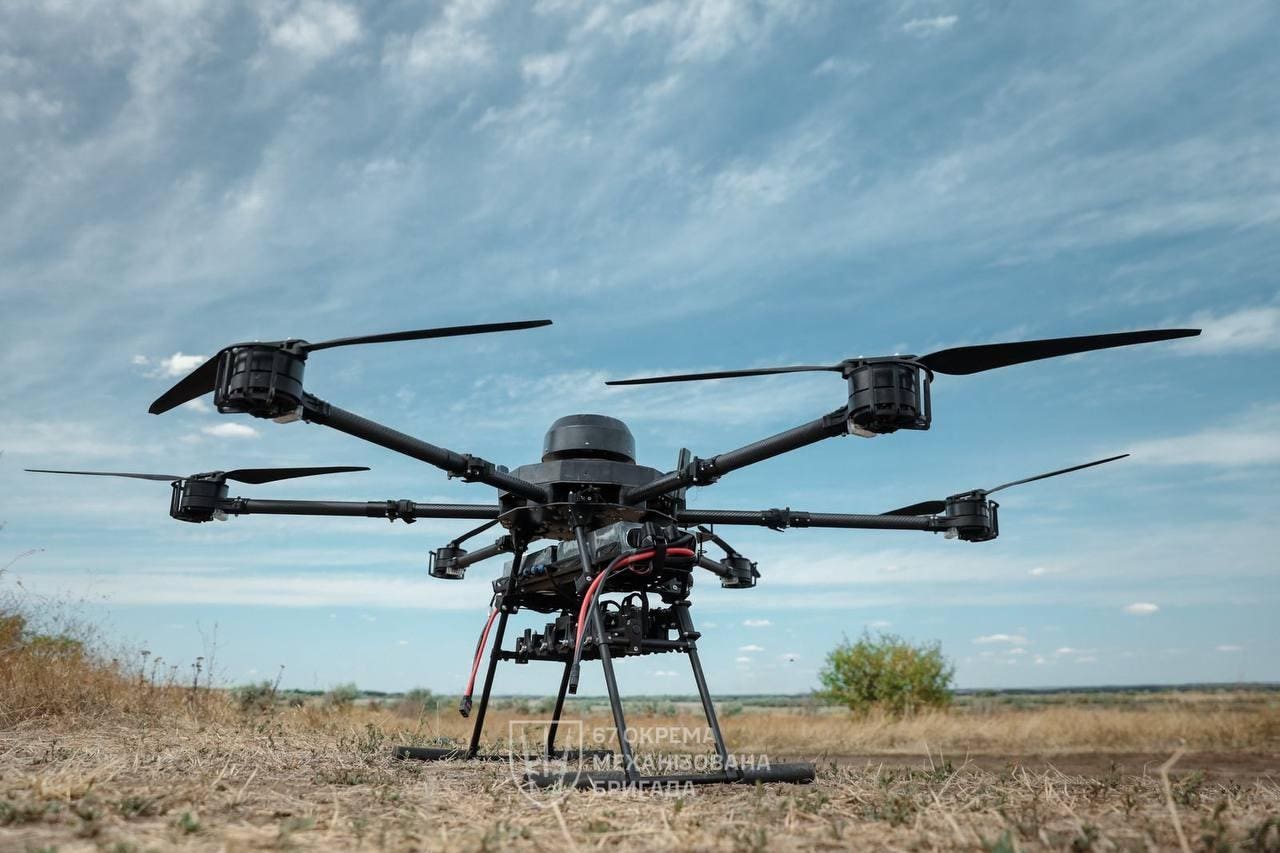
Forbes contributors publish independent expert analyses and insights. I'm a South London-based technology journalist, consultant and authorFollow AuthorApr 09, 2026, 06:36am EDTApr 09, 2026, 06:49am EDT--:-- / --:--This voice experience is generated by AI.“Learn more.This voice experience is generated by AI.“Learn more.The Vampire from SkyFall is a successful heavy lift drone used for bombing and logistics — a scaled up version of this technology can transport a casualty.Ukraine MoDHeavy-lift drones will soon evacuate casualties in Ukraine. This will be a gamechanger for getting wounded soldiers to medical facilities in time. The new capability also opens up the possibility of a new type of heliborne assault.
Heavy-lift drones are essentially scaled-up multicopters, and there are plenty of alarming videos of hobbyists using home-made flying machines to transport people. A slightly more sophisticated approach is enabling military drones to move passengers well ahead of their commercial equivalents.
Home made drones may be able to lift people but do not meet FAA safety standardsExtreme OutdoorsThere is a world of difference between a drone with the lifting capacity to carry a human, and one that can do it safely. An automobile needs more than an engine and wheels to drive legally. It has to meet federal and local safety standards right down to the taillights, turn signals and DOT-approved tires.
The curve is much steeper for air vehicles. To be certified as safe for passengers, an aircraft needs redundant flight controls and propulsion so there is no single point of failure. Passenger seating must be proven to be crashworthy, fire protection be proven, and the control software must be certified safe under all conditions.
Certifying an aircraft takes years and passenger-drone makers like Volocopter, Wisk Aero and EHang have been flying aircraft for a while, but are all racing to jump through the regulatory hoops and provide the first urban air taxi service in the 2026-2028 time frame. Safety standards mean their aircraft have passenger cabins which look like conventional helicopters.
Chinese-made passenger drone EHang 184 in a test flight in 2018 Visual China Group via Getty ImagesThings are different in Ukraine, where transporting an injured passenger is a matter of life and death. Getting through the ?grey zone”, the 10+ miles back from the front line covered by enemy drones, is difficult and dangerous. Few vehicles make it through, and much of the resupply and casualty evacuation is now carried out by wheeled or tracked robots. Some have armored capsules, to protect the passenger from strikes by Russian FPVs.