The UAV drones are aircraft that operate without a human pilot onboard. It can be controlled remotely or programmed to fly on its own using software and GPS systems. Previously, it was exclusively used for military operations, but nowadays the use of UAV drones is very common, from capturing aerial photos at weddings to inspecting power lines and delivering packages.
Industries are seeking faster, safer, and more cost-effective ways to operate processes to reduce manual labour and risks. The UAV drones fit perfectly into this need. The UAV drones commonly used in monitoring farmlands allow farmers to respond quickly to problems such as pests and droughts. The rise of drones is driven by improvements in battery life, navigation systems, sensors, and data processing.
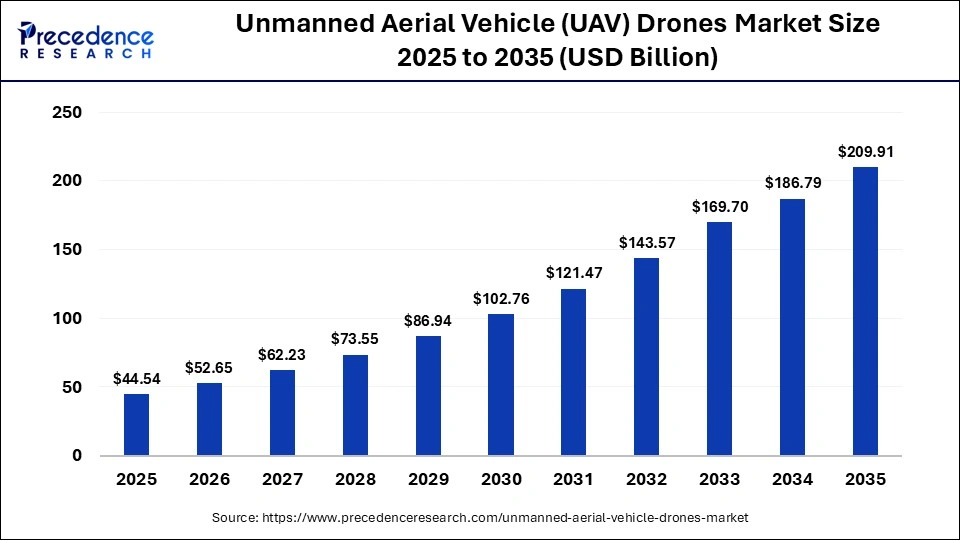
The global unmanned aerial vehicle (UAV) drones market size surpassed USD 44.54 billion in 2025 and is estimated to increase from USD 52.65 billion in 2026 to approximately USD 209.91 billion by 2035, growing at a CAGR of 16.77% between 2026 and 2035.
Nowadays, drone technology is rapidly being used to gain a powerful new platform for data collection, safety monitoring, and operational efficiency. One of the biggest advantages of using drones is that they save time and effort. Tasks that took several hours or days can be done in a fraction of the time. For example, surveying a large piece of land manually would take days, but by using a drone, the same data can be captured within hours. This allows companies to save time and money.
UAV drones equipped with cameras and sensors can capture detailed information in real time. This helps companies to make better decisions in time. For example, farmers can access crop health, track growth, and even use drones for spraying fertilisers and pesticides.
Many industries involve risky environments such as mining areas, construction sites, and oil rigs. Humans working in such areas carry a risk to their lives. UAV drones can reduce that risk by handling inspection and data collection remotely.