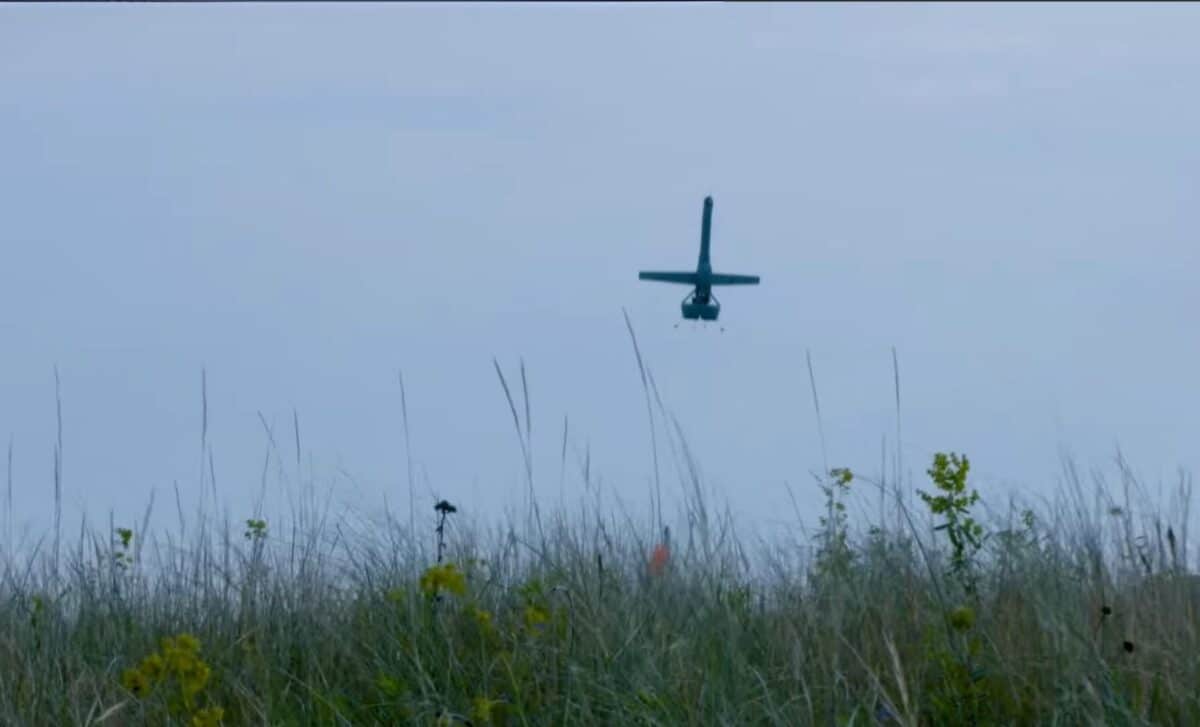
The Royal Netherlands Navy has declared a new unmanned aircraft operational, one built specifically to function where conventional drones go blind. Tested in some of Europe's most punishing maritime conditions, it requires no runway, no satellite signal, and no active communications link to complete its mission. The aircraft is already aboard multiple warships, and eight vessels are being permanently equipped to support its operations.
The Royal Netherlands Navy has declared Shield AI’s V-BAT unmanned aircraft system operational following shipboard testing in Norwegian waters. The platform, designed for intelligence and reconnaissance missions, can function in environments where satellite navigation and communications networks are unavailable.
The announcement positions the Netherlands as one of the first NATO navies in Europe to formally integrate a VTOL drone system built explicitly for contested electronic environments. The V-BAT’s operational clearance follows an evaluation period aboard the HNLMS Johan de Witt, a landing platform dock operating off the northern Norwegian coast, a region where polar geomagnetic anomalies routinely interfere with standard navigation systems.
The V-BAT is classified as a NATO Class I small vertical take-off and landing unmanned aircraft. Using a ducted-fan design, it can rise and descend vertically like a helicopter and then transition into forward flight characteristic of a fixed-wing aircraft, without requiring a runway, catapult, or recovery system. The enclosed-rotor configuration allows unassisted launch and recovery from ship decks, urban rooftops, and other confined surfaces.
Shield AI describes it as the only drone in the Group 3 through Group 5 category with documented operational experience in environments where both GPS signals and radio communications have been denied or jammed. Brandon Tseng, the company’s president and co-founder, said in a statement that the V-BAT had become the “de facto intelligence, surveillance, reconnaissance, and targeting drone of choice by militaries worldwide” precisely because of its reliability in such conditions.
During the Norwegian trials, the aircraft performed across a series of challenging operating scenarios, including high winds, sub-zero temperatures, and geophysical interference associated with high-latitude environments. The drone transmitted real-time video feeds to the Johan de Witt, according to a Shield AI press release, allowing the ship’s commanders to assess objects on the water and explore alternative headings for the vessel. The missions demonstrated the system’s core value proposition: delivering persistent maritime domain awareness without dependence on functioning communications infrastructure.