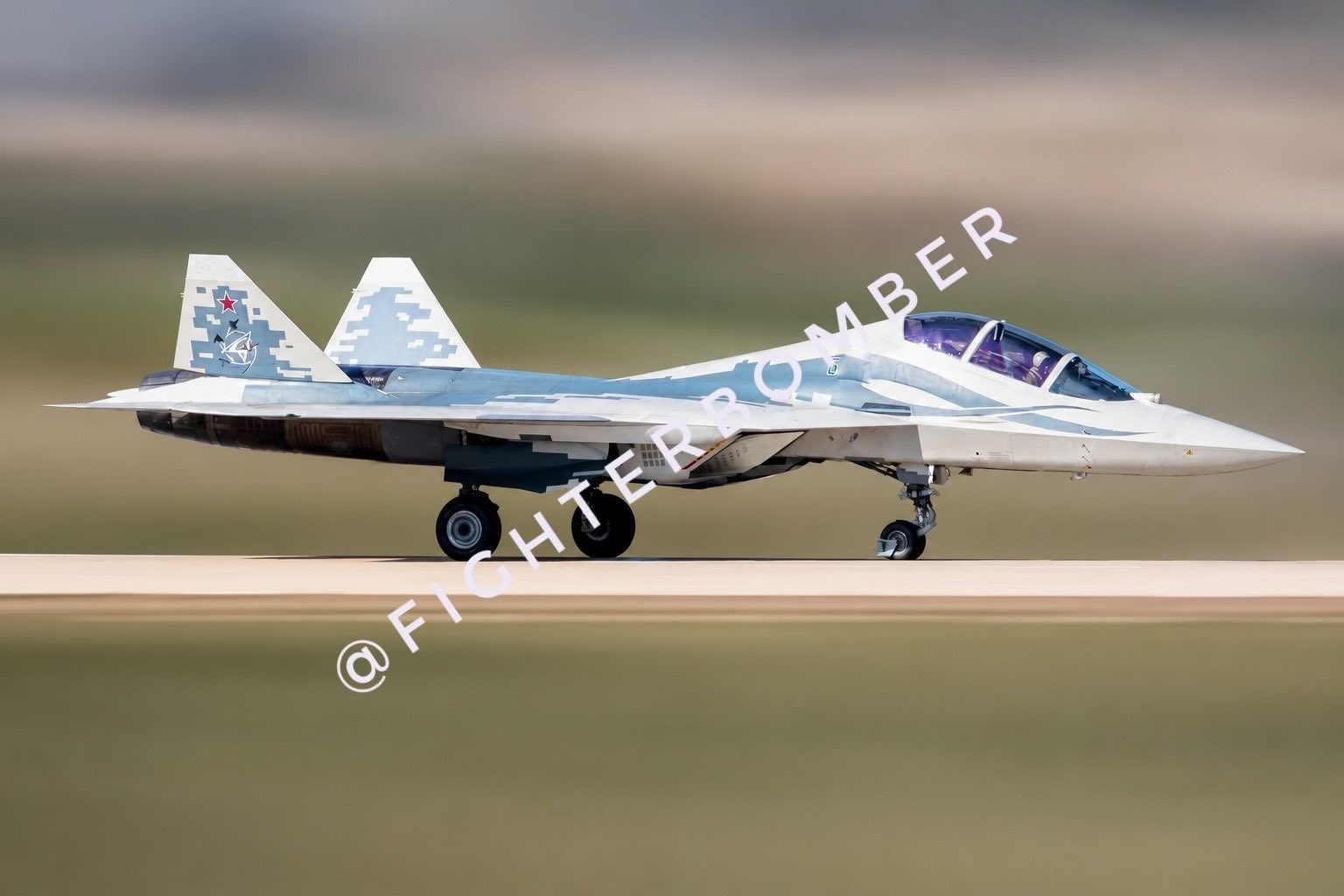
(DEFENCE SECURITY ASIA) — The appearance of Russia’s new two-seat Su-57 stealth fighter variant has triggered immediate scrutiny because even preliminary movement inside Moscow’s fifth-generation ecosystem now carries implications extending beyond aviation and into broader geopolitical competition across Eurasia and the Indo-Pacific.
Claims circulating through Russian military Telegram networks rapidly transformed what began as a limited testing event into a narrative suggesting Russia had launched an entirely new stage in crewed-uncrewed air warfare architecture designed for future multi-domain conflict environments.
The strategic significance extends beyond the aircraft itself because the platform is increasingly framed as a central node for manned-unmanned teaming operations, while its development intersects directly with Russian export ambitions, India’s fighter modernization dilemmas, and global competition over sixth-generation combat doctrine.
Russian military-linked Telegram channels, including Fighterbomber and associated defense communities, described the aircraft as an upgraded two-seat Su-57 variant reportedly possessing improved stealth characteristics, enhanced avionics architecture, and expanded combat functionality aimed at future operational requirements.
The reports spread rapidly across social media platforms and defense discussion networks on May 16, creating an immediate perception that Russia had already initiated the maiden flight phase of its latest stealth aircraft evolution.
However, subsequent reporting from Russian state-aligned aviation sources introduced critical distinctions indicating that the aircraft had not yet entered airborne trials and instead remained within preliminary ground evaluation phases.
Published on 5/18/2026