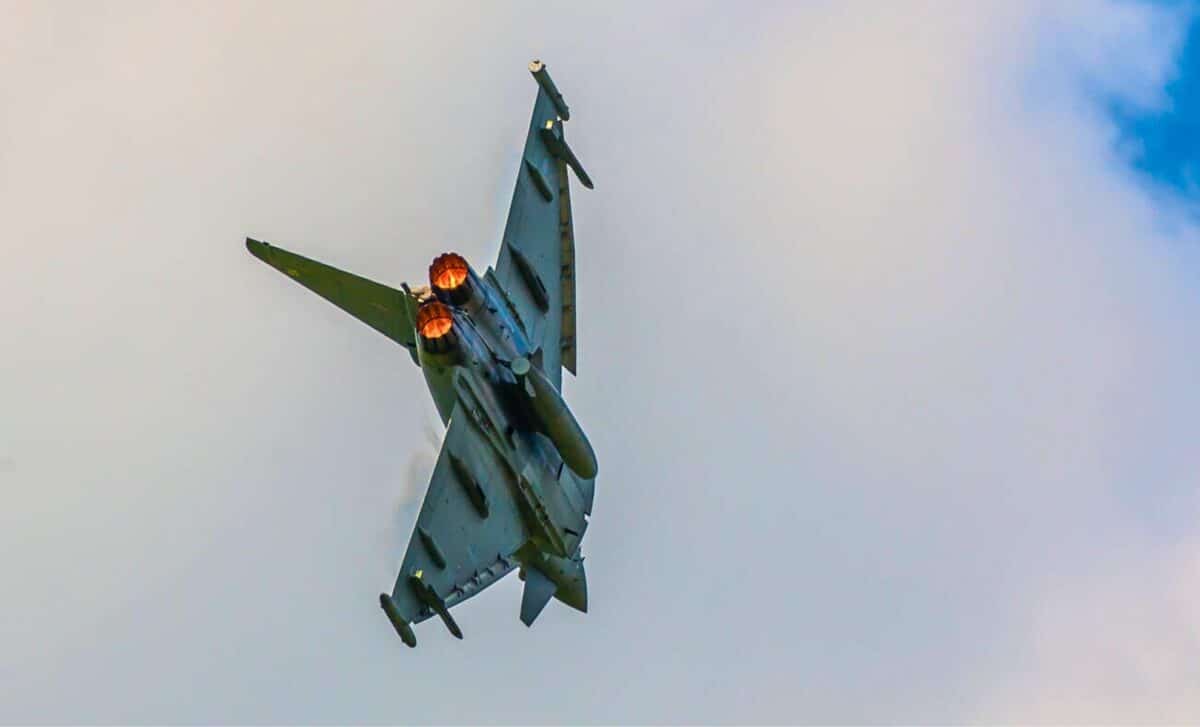
The moment the radar blip appeared, someone in an underground bunker made a split-second call that would send ?100 million worth of British engineering screaming through the night sky.
The night sky above the Gulf region has become a crowded and dangerous place, and not just for commercial airliners. Just past midnight local time, a fast-moving blip appeared on radar screens, tracked by operators watching for threats approaching Bahrain’s airspace.
UK Ministry of Defence officials confirmed that RAF fighter jets, scrambled from their bases, successfully engaged an uncrewed aerial system heading directly towards the kingdom. It was a precise, high-stakes intercept conducted at an undisclosed altitude, with the drone neutralized before it could reach its intended target.
The operation, however, was not a one-off event. Hours earlier, in a separate incident, RAF aircraft had already been activated to defend the skies over Jordan. There, pilots tracked and shot down another hostile drone, marking a significant escalation in the UK’s defensive posture across the region.
These interceptions represent a sharp increase in the tempo of operations for British forces stationed in the Middle East. According to a report in The Independent, the MoD revealed that the UK has now begun conducting dedicated defensive air sorties specifically in support of the United Arab Emirates, a key ally that has faced repeated drone threats in recent months.
The decision to fly combat air patrols over the UAE signals a broadening of the UK’s commitment. Rather than simply reacting to incidents, the RAF is now actively patrolling to deter and, if necessary, destroy incoming threats before they can strike civilian or military infrastructure. This puts pilots in a state of constant readiness, a demanding operational reality far removed from routine training exercises.