In the early hours of June 26, 2021, two consecutive blasts rocked the highly fortified Indian Air Force station in Jammu. This was the first terror attack in which drones were used to airdrop bombs on a major security installation. Though the explosions caused no serious damage, the attack reflected a paradigm shift in the tactics of Pakistan-based terror groups: the threat had moved from the ground to the air, rendering traditional security measures permanently inadequate.
The use of drones, however, had already been a regular feature across the restive Line of Control and International Border in J&K for over a year. One such drone, carrying a US-made M4 semi-automatic carbine, two magazines, 60 rounds and seven Chinese grenades, was shot down by the BSF near Kathua district’s Rathua village on June 20, 2020. The payload was reportedly marked with the’name of Ali Bhai — believed to be a code name for a Jaish-e-Mohammad operative.
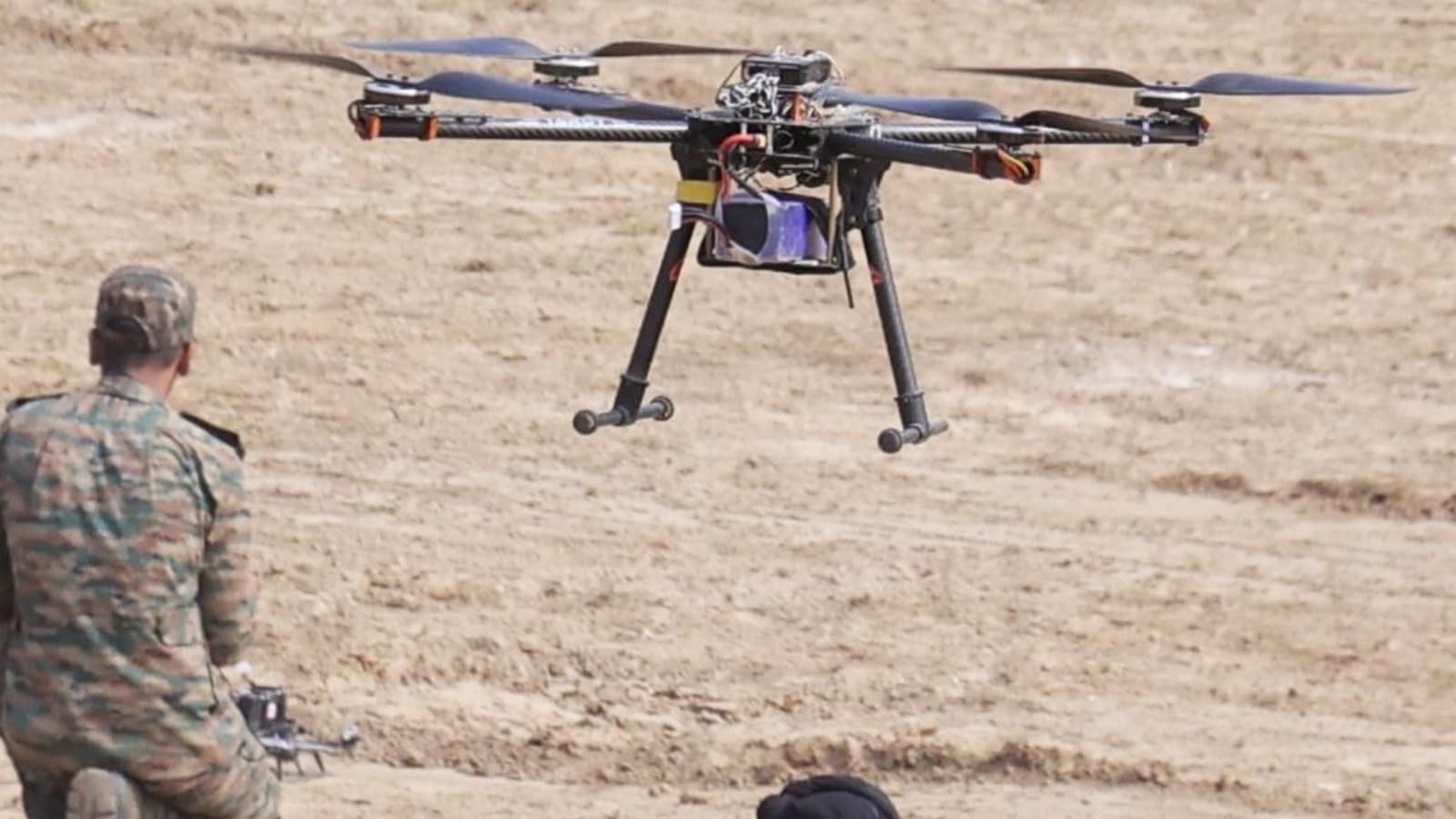
The introduction of drones has rendered established security measures obsolete and fundamentally changed how border security is conceived. According to a Ministry of Home Affairs report last year, two to three drones were sighted, and one drone incursion occurred daily, over the past five years. While the focus of incursions in Punjab and Rajasthan is primarily smuggling, the situation in J&K is especially challenging.
In J&K, drones are being used to airdrop weapons, ammunition and narcotics, conduct tactical surveillance, guide infiltrating militants and carry out attacks. Soon after the beginning of Operation Sindoor last year, drones became the weapon of choice — the first such use of drone swarms in an Indo-Pak conflict, changing the nature of border warfare permanently.
Between May 7 and 8 last year, Pakistan launched drone attacks using nearly 300-400 drones targeting around three dozen locations from Kashmir to Sir Creek in Gujarat. A large number targeted Jammu and Kashmir, and almost all were neutralised by Indian defence forces, an Army officer said.
Indian armed forces deployed SkyStriker Kamikaze drones, HAROP and Nagastra-1 during their campaign. Counter-drone systems were activated, including Man-Portable Air Defence Systems (MANPADS), Direct Energy Weapons (DEWs) and the indigenous anti-drone D-4 system. A laser system called KAVACH has also been put into action in J&K to detect drone infiltration attempts and send early warnings. Forces have additionally deployed jammers to disrupt hostile drone flights and High-Altitude Long-Endurance (HALE) drones to monitor difficult terrain.