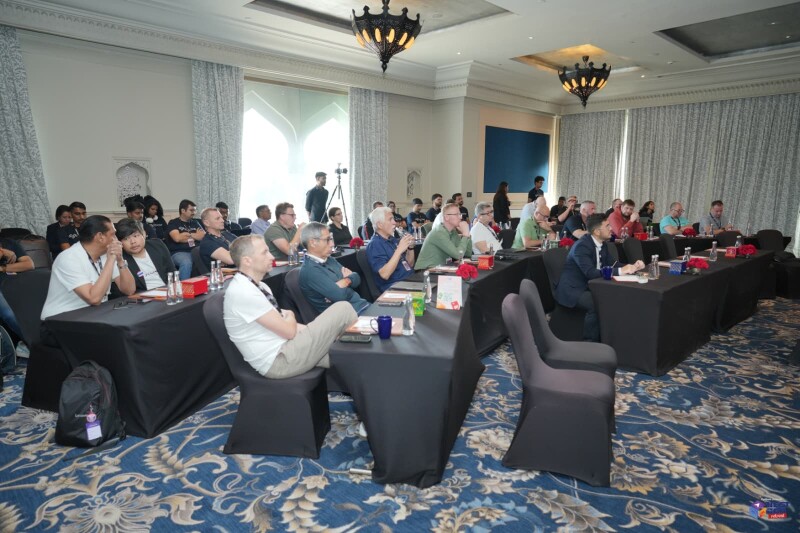
When the drone community gathered in Jaipur, India from March 1 to 5 for NestGen, the atmosphere carried an unusual mix of excitement and unease. The event, organized by Flytbase, showcased the rapid evolution of drone automation, Uncrewed Traffic Management (UTM) platforms, AI’enabled operations, and enterprise adoption across sectors. Yet beneath the optimism, many attendees felt a deeper, more structural tension: The sense that the industry is approaching a decisive regulatory moment, and that the business side of the sector is effectively in a holding pattern while the world waits for the FAA's long’anticipated final Part 108 rule on BVLOS operations. That uncertainty has created a paradoxical environment in which competitors are increasingly acting like collaborators, united by the recognition that the real threat to their future is not each other, but regulatory delay.
On February 20, we published an article that forecasted exactly the phenomenon felt in this gathering in India: The idea that the entire world seems to be waiting for Part 108 to mimic its basic guidelines in their local jurisdictions.
Commercial UAV News interviewed Juan Bergelund, CEO of UAV Latam, who expressed strong support for the meeting's purpose and corroborated the thesis that Part 108 seems to be a global preoccupation.
“There as a general feeling amongst the attendees that the industry is at a crossroads,” said Bergelund. “Most people I met had been in the drone business for a decade or more, and we feel as if we are in version 2.0 or even 3.0 technically, especially in BVLOS flights, but the regulation is holding back the entire industry around the world. That’s why there was so much talk about Part 108 in the corridors and meetings.”
The FAA’s approach to BVLOS seems to have civil aviation authorities across Asia, Europe, Latin America, and the Middle East watching closely, often using those frameworks as reference points for their own modernization. As a result, the pace of U.S. regulatory progress has become a proxy for global confidence in the scalability of drone operations. That dynamic was palpable in Jaipur, where companies from India, the Gulf, Europe, and North America all expressed variations of the same concern: The technology is ready, the demand is real, but the regulatory runway is not yet open.
The core of the anxiety stems from a simple reality. The drone industry has matured technologically, but the business models that depend on scale remain constrained by legacy rules. Under Part 107, operators are still limited to visual line of sight, a restriction that makes sense for early-stage safety but is fundamentally incompatible with the economics of large’scale inspection, delivery, mapping, and public safety automation. Waivers and exemptions exist, but they are slow, inconsistent, and expensive. They also do not provide the predictability that investors, enterprise customers, and long’term product roadmaps require.