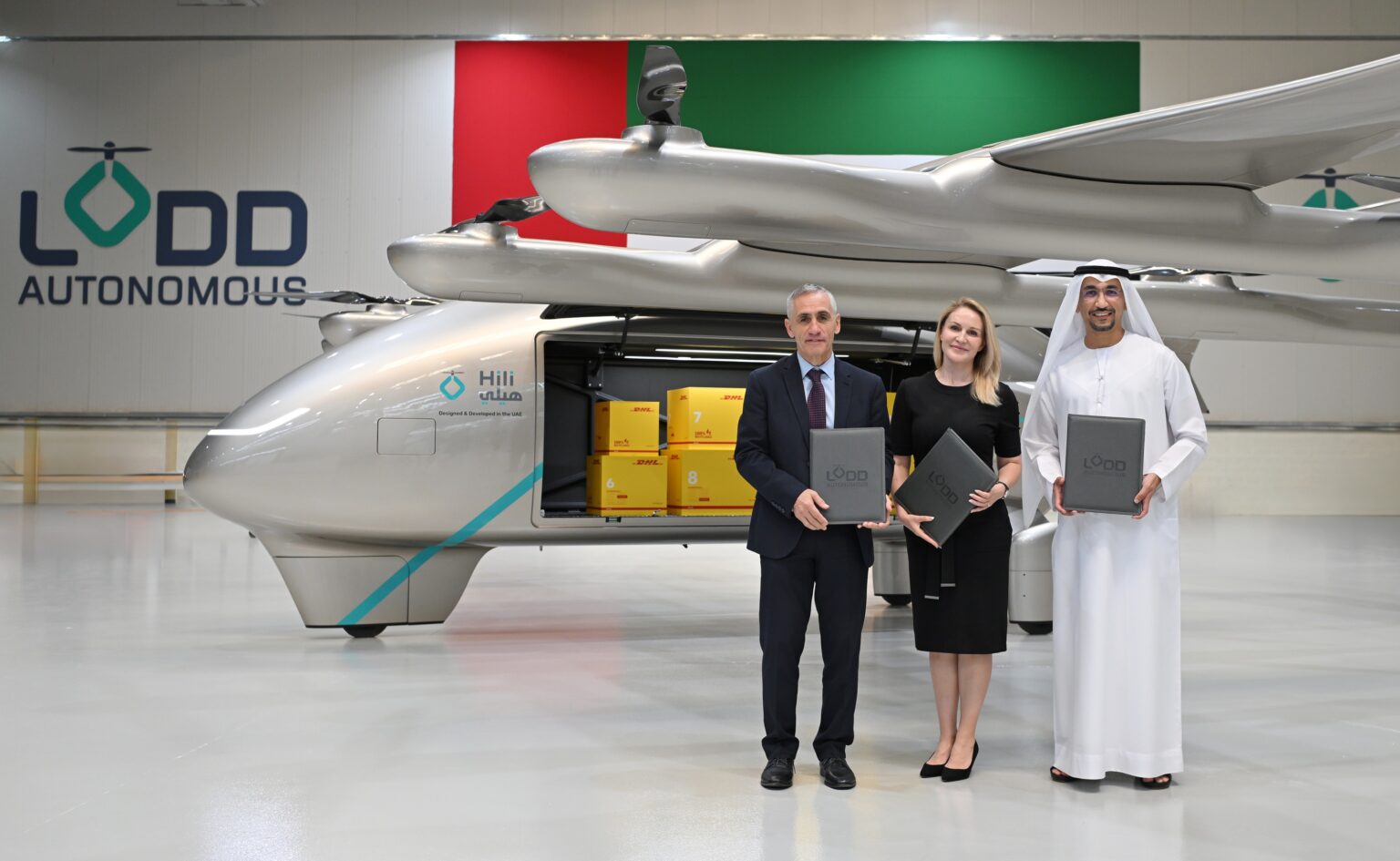
DHL Express and LODD Autonomous have signed a Memorandum of Understanding (MoU) to assess how the unmanned Hili aircraft’a VTOL platform with a maximum payload of 250 kg, the capacity to carry two Euro pallets, and an advertised range of 700 km with a +30 minute reserve’can be integrated into DHL’s UAE last- and middle-mile network. The collaboration will focus on route selection, payload optimisation, turnaround times, and interoperability with existing logistics systems across approximately 40 local DHL service points, gateways and hubs in the region.
Both parties plan a series of joint operational workshops to convert the MoU into testable pilots. Workshops will map priority corridors where road congestion or urban density make aerial unmanned delivery attractive, identify payload profiles that suit the Hili’s 250 kg capacity, and model integration with DHL’s ground fleet and scheduled flights. Key performance indicators will include delivery time reduction, cost per shipment, payload mix (parcels vs. palletised cargo), and safety metrics.
Hili’s VTOL capability and 14,000 ft maximum cruise altitude offer operational flexibility, but integration will require rigorous testing of command-and-control links, detect-and-avoid systems, and secure payload handling interfaces. Interoperability with DHL’s IT stack’manifesting, tracking, and exceptions handling’will be a priority to avoid creating visibility gaps in the supply chain. Certification pathways, airspace permissions, and local regulatory approvals in the UAE will also shape deployment timelines.
DHL’s UAE footprint’50 years in-market with an extensive regional network and a fleet of more than 350 vehicles plus over 150 daily flight connections’gives the company significant leverage for testing unmanned systems at scale. If pilots validate the Hili concept, logistics operators could reassign certain road routes to airborne assets, reducing parcel transit times and potentially lowering vehicle-miles-travelled in congested corridors.
From a cost perspective, unmanned VTOLs can be more efficient on specific corridors’especially where ground transit is slow and labor costs for last-mile delivery are high. There’s also an environmental angle: replacing stop-start van routes with electric or hybrid VTOL flights may reduce urban emissions per kilogram delivered on some routes, though lifecycle analysis must factor manufacturing, energy mix, and infrastructure footprints. In short, the economics will be route-specific: for some lanes, it’s a no-brainer; for others, not so much.
For carriers and shippers, the DHL’LODD collaboration signals a tangible step toward commercialising autonomous air cargo for the last mile. Fleet planners should revisit network models and evaluate which lanes can be transitioned to aerial delivery without disrupting ground-based distribution. Forwarders, couriers, and freight brokers will want to understand how manifesting, insurance, and liability frameworks adapt to unmanned assets.