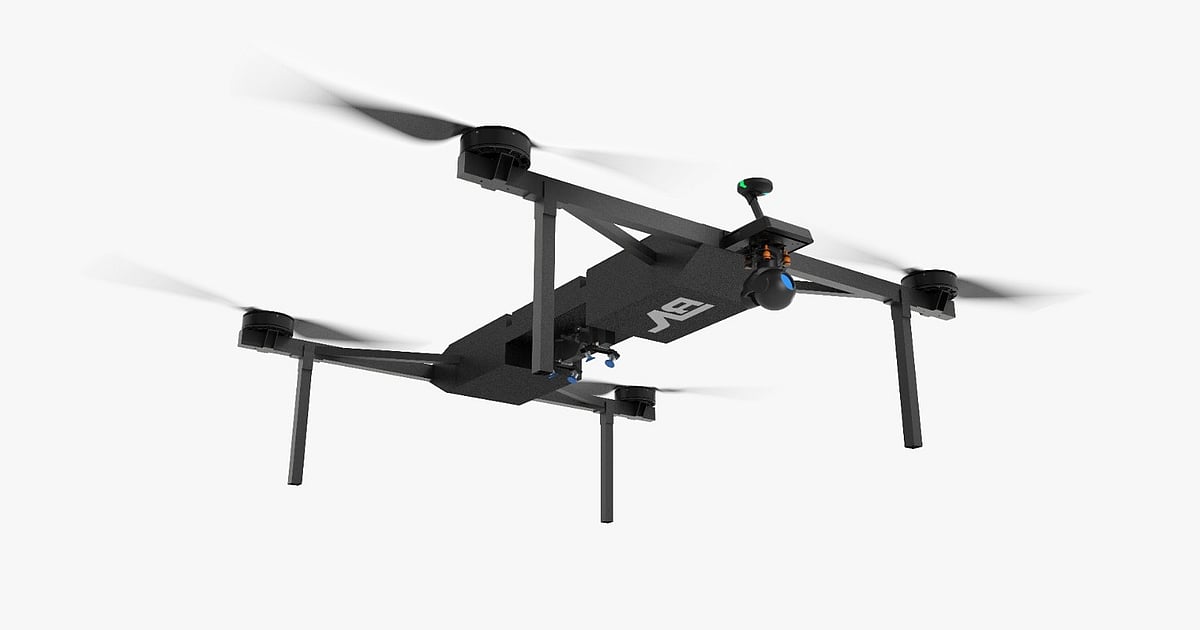
E-PAPERDHxIndia Karnataka DH Specials Opinion World Business Sports Video Entertainment ADVERTISEMENT HomeindiamaharashtraAir Hans aims to transform last-mile delivery in India's toughest terrainsThe launch comes at a time when drones are increasingly being viewed as a critical component of India's logistics ecosystem. Mrityunjay BoseLast Updated 02 June 2026, 16:15 ISTFollow UsAir Hans is designed to provide reliable last-mile logistics support.
Mumbai: Despite significant investments in roads, tunnels and border infrastructure over the past decade, India continues to face a stubborn last-mile connectivity challenge in some of its most remote and geographically difficult regions.
Snowfall, landslides, floods and rugged terrain often render vast stretches inaccessible for weeks or even months, disrupting supply chains and delaying the movement of critical goods.
The company has launched Air Hans, a heavy-lift unmanned aerial vehicle (UAV) designed to provide reliable last-mile logistics support in regions where conventional transport networks face severe limitations. The indigenous platform has already undergone trials in some of India's most challenging operational environments and is being positioned as a versatile solution for defence, infrastructure, disaster response and commercial logistics.
“Air Hans was built for the missions that ground transport cannot reach and conventional drones cannot sustain. Whether it is stringing power lines, delivering essential logistics to a forward post, or dropping aid in a disaster zone, the platform optimises response and saves crucial time and human labour. India has too many places where the last mile is not a logistics problem; it is a geography problem. Air Hans is our answer to that,” said Satyabrata Satapathy, Co-Founder and Chief Executive Officer of BonV Aero.
The launch comes at a time when drones are increasingly being viewed as a critical component of India's logistics ecosystem. Policymakers and industry experts see unmanned aerial systems playing a larger role in connecting remote communities, supporting healthcare delivery, improving disaster preparedness and reducing logistical bottlenecks in difficult terrain. The push also aligns with India's broader ambition to build indigenous high-technology capabilities under the Atmanirbhar Bharat initiative.